Katy’s diary
In the WoodsKaty’s diary is a three-quarters-full record of roughly eight months in Katy Devlin’s life, recovered only after the murder investigation and trial had ended. Hidden behind a framed poster at the Cameron Academy, it preserves her own account of ballet, friendships, and hopes for the future, but also records fear and manipulation within her family. Its late discovery makes the diary more than a source of new information: it restores the everyday person obscured by the case and exposes how much of her experience had remained inaccessible to those investigating her death.
Discovery and Physical Form
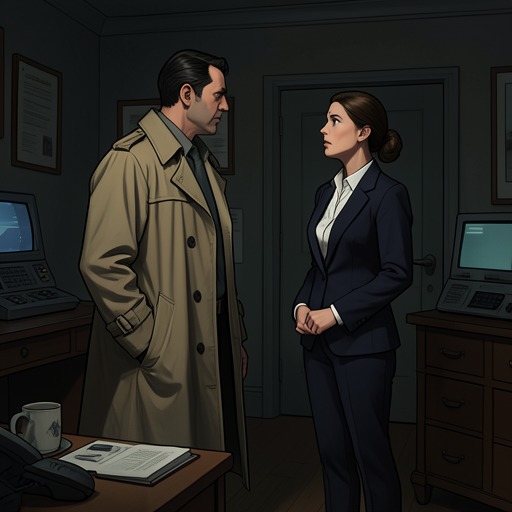
The diary had been described by Rosalind Devlin as something Katy had become bored with and thrown away. Instead, it was taped to the back of a framed Anna Pavlova poster hanging on a studio wall at the Cameron Academy. The cleaning lady found it during an unusually thorough cleaning and, recognizing the name on its cover, called Simone Cameron. The discovery occurred after Rob Ryan had returned to work and was no longer assigned to the Katy Devlin case. Although he could have directed Simone to another officer, he left the statements he was checking and drove to Stillorgan.
Simone was alone at the Academy when Rob arrived. The photographs of Katy had been removed from the notice-board, but the studio’s familiar professional surroundings brought the investigation back to him. The diary’s cover marked it as private and emphatically instructed others to keep out; nevertheless, Rob opened it after asking whether Simone had read it. That contrast matters: the object had been concealed from view and claimed as Katy’s private possession, yet its contents became available to investigators only after she could no longer explain or contextualize them herself.
A Child’s Ordinary Life
The entries begin regularly, at about half a page a day, and become more intermittent over the months. Much of the early material concerns ballet: Katy’s technique, rehearsal, and preparation for a performance. She records Simone’s advice about making a movement express the character’s feelings, and the diary shows how seriously she takes dancing as a discipline. Her acceptance to the Royal Ballet School brings an exuberant burst of capital letters and star stickers, marking the future she has been working toward.
Other pages preserve a lively social world in the unselfconscious detail of a young person’s account. Katy writes about sleepovers, friends’ crushes, make-up, shopping, and jokes shared over food. She notes trying on a friend’s pointe shoes, disliking cabbage, and being expelled from Irish class for texting. These details do not advance a police theory, but they establish what the case’s fragmentary accounts could not: Katy’s life was not reducible to the circumstances of her death. She was a determined dancer and a schoolgirl with friendships, enthusiasms, and ordinary irritations.
Fear and Family Pressure
The diary’s account changes when Katy writes about Rosalind’s response to her possible departure for ballet school. Rosalind tells her that if she leaves, Jessica Devlin will kill herself and Katy will be responsible. Katy records being frightened and uncertain whether to ask their parents for help, because she fears they may prevent her from going. The entry reveals how the prospect of a long-held ambition is turned into an apparent choice between leaving and causing harm to her sister.
A later entry describes Katy refusing a drink that Rosalind insists she take. Rosalind links the drink to Katy’s dancing and warns that she will not dance well without it; Katy writes that she believes it is making her sick. She also describes Rosalind becoming angry and Jessica being forbidden to speak to her. Read alongside Katy’s hopes for ballet school, this passage records a conflict between her growing resistance and Rosalind’s influence over her health and relationships. Another entry says Rosalind has misrepresented Katy’s feelings to Christina, damaging those friendships; Katy’s emphatic expression of anger conveys how deeply that isolation affects her.
Katy also writes that she found the diary hidden in Rosalind’s shoe box in a wardrobe. Afraid Rosalind would discover that she had retrieved it, she takes it to Simone’s studio and plans to write there while practicing alone. The concealment gives the diary a practical significance within Katy’s life: it is not simply a place to record events but something she tries to keep beyond Rosalind’s reach. Its eventual discovery behind the poster at that same Academy brings the hiding place and the recovered record into a single chain of events.
The Last Entry and Its Afterlife
The final entry is dated three days before Katy died. In it, Katy writes that Rosalind is sorry for having been cruel about her going away, and explains the earlier behavior as worry about Jessica and sadness at Katy’s impending absence. Rosalind is going to get her a lucky charm for dancing. The entry does not erase the fear and conflict recorded earlier; instead, it preserves Katy’s own late understanding of the reconciliation, leaving the reader with both the damage and the renewed hope she believed was possible.
Rob reads the diary with Simone sitting opposite him. He recognizes that Katy had occupied less space in his thoughts than a victim might be expected to, because the investigation had presented her through other people’s accounts and through the consequences of her death. The diary unsettles that distance: its handwriting and small particulars make her voice present, while its account of the months before her death reveals information the investigation did not have. Simone asks whether finding it sooner would have made a difference, but the scene supplies no answer. The diary’s significance lies partly in that unresolved question: it gives Katy a fuller presence after the fact, without undoing the lateness of its arrival or proving what an earlier discovery might have changed.